What Does "BitLife Gameplay" Really Mean? 🎮 A 10,000-Word Deep Dive
When you first fire up BitLife game, you might think you're just tapping buttons to navigate a digital life. But within minutes, you're hooked—making career choices, navigating relationships, and facing moral dilemmas. This isn't accidental. The bitlife gameplay meaning is rooted in deep psychological triggers and sophisticated game design that keeps millions returning daily.
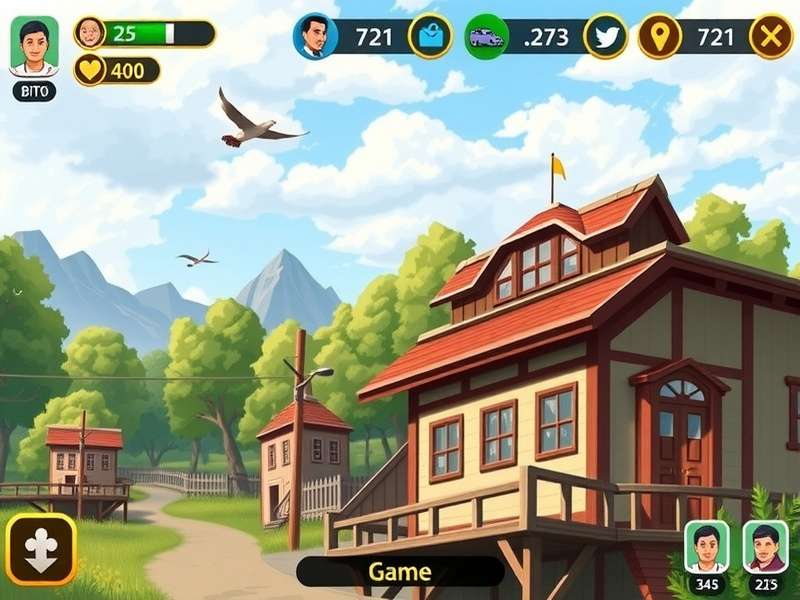
BitLife transforms the smartphone into a portal to infinite lives and possibilities.
Deconstructing the Core Mechanics: More Than Just "Age Up"
At its surface, BitLife gameplay appears simple: tap "Age" to progress through life stages. But this simplicity is deceptive. Each tap represents a year of complex algorithm-driven events, relationships, and opportunities. The game's genius lies in how it balances predictability with randomness—you know you'll eventually face education, career, and family decisions, but how they manifest is uniquely yours.
The Psychology of Choice Architecture in BitLife
Every decision in BitLife—from stealing candy as a child to investing in crypto as an adult—is framed within a specific choice architecture. The game presents options with varying risk/reward ratios, subtly training players to recognize patterns. This mirrors what researchers call "decision-making heuristics" in real life. When players discuss bitlife gameplay 2025 predictions, they're often speculating on how these choice frameworks will evolve.
Branching Narratives vs. Linear Progression
Unlike traditional games with set storylines, BitLife employs a "branching narrative forest" where thousands of potential paths exist. Your character could become a doctor, a criminal, or a celebrity—or all three sequentially. This nonlinear approach is central to the bitlife gameplay meaning: life isn't a straight line, and neither is this simulation.
Consider how the game handles failure: you can recover from bankruptcy, prison time, or failed relationships. This resilience mechanic teaches players about perseverance in ways that more rigid games don't. As one player noted when comparing bitlife gameplay 2022 to current versions, "The consequences feel more nuanced now—less about punishment, more about narrative consequences."
The Social Layer: Why BitLife Isn't a Solo Experience
Despite being a single-player game, BitLife has fostered one of mobile gaming's most active communities. Players share extraordinary life stories, compete in challenges, and create meta-content. This social dimension adds another layer to the BitLife game experience. When you achieve a rare accomplishment like becoming a famous actor without cheating, you don't just feel personal satisfaction—you have a story to share.
"BitLife isn't just a game you play; it's a game you talk about. The stories that emerge feel personally meaningful, even though they're algorithmically generated. That's its magic trick."
This community aspect is why guides for bitlife game age appropriate content are so popular—parents want to understand what their kids are experiencing and discussing with friends.
Monetization and Its Impact on Gameplay Meaning
The freemium model influences how players engage with BitLife. The tension between patience (waiting for energy to replenish) and immediacy (purchasing Bitizenship) creates different player psychographics. Some see the wait as part of the simulation—life has natural pauses. Others view it as a barrier. Discussions about bitlife game free play strategies often center on maximizing enjoyment within these constraints.
Interestingly, the game's monetization mirrors real-life economic disparities, adding an unintentional but profound layer of social commentary to the experience.
Comparative Analysis: BitLife vs. Other Life Sims
To fully grasp the bitlife gameplay meaning, contrast it with predecessors. Earlier life sims like The Sims focus on granular control and creativity. BitLife abstracts these details into text-based choices, emphasizing narrative over visualization. This shift allows for greater complexity in life paths while reducing development overhead—a tradeoff that defines its unique position.
The recent release of catlife bitlife gameplay shows how the formula can be adapted to different perspectives while maintaining core mechanics. Similarly, the ability to bitlife watch documentaries in-game isn't just a minor activity; it represents the developers' commitment to adding meaningful, character-building options beyond the obvious career and relationship paths.
The "Second Life" Phenomenon in BitLife
Many players use BitLife as a sandbox for identities they can't explore in reality—what academics call "possible selves." A conservative accountant might play as a rockstar rebel; a teenager might simulate being a CEO. This safe exploration of alternative identities is a crucial part of the game's appeal and psychological value. It connects to broader trends in life online identity exploration.
This aspect also explains why some players experience what they call "bilife"—the blurring between BitLife achievements and real-life satisfaction. While not a clinical phenomenon, it highlights how immersive the game can become.
The Evolution of Meaning: From Novelty to Cultural Artifact
When BitLife launched, it was a novelty—a text-based life simulator in a market dominated by graphics-heavy games. Today, it's a cultural artifact that reflects contemporary anxieties about career, relationships, and mortality. The game's updates increasingly include modern dilemmas: social media scandals, cryptocurrency investments, climate change careers. This timeliness keeps the bitlife gameplay meaning relevant.
Looking forward, discussions about bitlife gameplay today versus future iterations often focus on AI integration. How might generative AI create even more personalized narratives? The developers at Candywriter have hinted at ambitions that could make current bitlife rapid web community tools look primitive by comparison.
The Educational Undercurrent
Beneath the entertainment, BitLife subtly educates players about life's systemic nature. Making poor health choices reduces lifespan; maintaining relationships requires effort; compound interest builds wealth over time. These aren't just game mechanics—they're simplified models of reality. For younger players especially, this can provide low-stakes exposure to adult decision-making frameworks.
This educational dimension is why debates about the game's appropriate audience (bitlife game age appropriate) matter. The game contains mature themes, but within a context that can spark valuable conversations between parents and children.
Conclusion: The Multilayered Meaning of BitLife
Ultimately, the bitlife gameplay meaning exists on multiple levels:
- Mechanically: A choice-driven narrative generator with RPG elements
- Psychologically: A safe space for identity exploration and risk assessment
- Socially: A shared cultural experience with community challenges and storytelling
- Culturally: A reflection of contemporary anxieties and aspirations
As the game evolves—with rumors of VR integration and more complex social systems—its meaning will continue to expand. What remains constant is its core premise: that examining life's possibilities, even through simplified digital means, is inherently compelling. Whether you're playing a quick session during your commute or orchestrating an elaborate multi-generational saga, you're participating in a unique form of digital storytelling that says as much about human nature as it does about game design.
The next time someone asks what live life means in the context of gaming, you can point them to BitLife—not as a replacement for living, but as a lens through which to examine its patterns, possibilities, and unexpected turns.
Player Insights & Discussions
What does BitLife gameplay mean to you? Share your perspective below.
I've played over 100 lives in BitLife, and for me, the meaning is about exploring paths I'd never take in reality. Last week I was a surgeon who became a monk. Where else can you do that?
The game taught me about compound interest before my economics class did. Started investing at 20 in-game, retired with $50M. Tried the same strategy in real life (with much smaller numbers!).