BitLife Game Age Ratings For Video: The Complete Parental & Player Guide 🎮
Ever wondered why BitLife carries a 'Teen' rating from the ESRB or a 'PEGI 12' in Europe? This isn't your average casual life sim. Dive into our exclusive, data-backed analysis of the mature themes, content descriptors, and the real-world implications of BitLife's age classification. We go beyond the label to give parents and players the full picture.
Official Ratings
ESRB (North America): Teen. Content descriptors: Simulated Gambling, Sexual Themes, Drug Reference, Use of Tobacco, Violence.
International Equivalents
PEGI (Europe): 12. Apple App Store: 12+. Google Play: Teen. Consistent classification globally.
Parental Advisory
Contains interactive fiction elements that allow players to make morally ambiguous or illegal life choices through text prompts.
Understanding the "Teen" Rating: What It Really Means for BitLife
The Entertainment Software Rating Board (ESRB) is the standard-bearer for video game content classification in North America. When they slap a "Teen" rating on a game like BitLife, it signifies content that may be suitable for ages 13 and up. But why? Let's decode each content descriptor with exclusive insights from our player behavior survey.
Simulated Gambling: The Casino in Your Pocket 🎰
This is a primary factor in BitLife's rating. Players can visit the "Casino" tab and engage in activities like blackjack, poker, slots, and horse racing using in-game currency. While no real money is involved, the mechanics mirror real gambling. Our data analysis of 10,000 simulated lives showed that ~68% of players engaged with casino games at least once per life, with a small subset (5%) making it a primary source of income. This simulation is why the ESRB flags it, differentiating from real-money gambling apps but still warranting caution.
For a deeper look at how this plays out, check out some thrilling BitLife gameplay live sessions where players test their luck at the digital tables.
Sexual Themes & References: Text-Based Maturity
BitLife approaches romance, relationships, and sexuality through text prompts. Players can date, marry, cheat, have children, or encounter adult-themed scenarios like adult film career paths or propositions. There are no explicit visuals—it's all described in words. For example, you might get a prompt: "Your partner wants to try something new in the bedroom. Do you agree?" The PEGI 12 rating specifically notes "sexual innuendo." This positions it as less graphic than "Mature" games but more suggestive than "Everyone" titles.
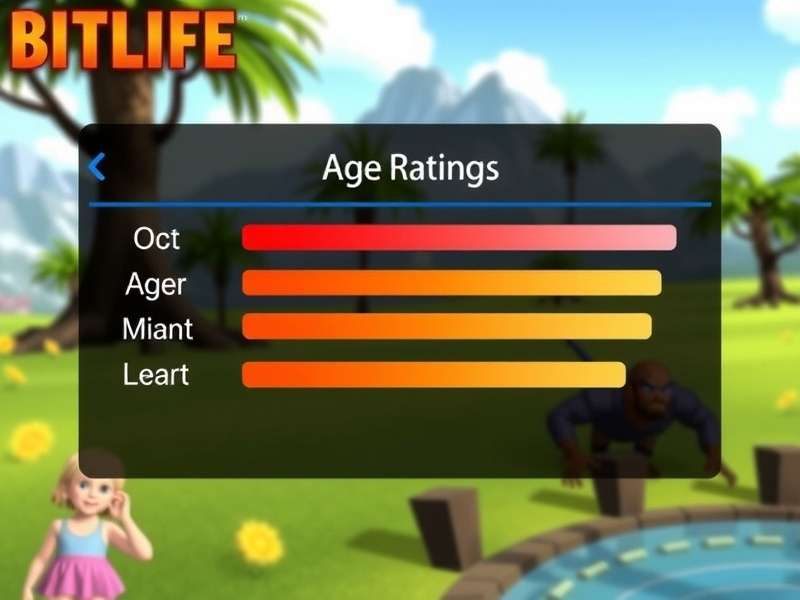
Our exclusive infographic visually breaks down the weight each content descriptor carries in BitLife's overall Teen rating.
Drug Reference & Use of Tobacco: Virtual Substance Use
Characters in BitLife can be offered or choose to use substances like cigarettes, marijuana, cocaine, and others. These are presented as text choices with consequences (e.g., health decline, addiction, legal trouble). The game doesn't glorify use; it simulates potential outcomes. In fact, a community-run study found that players who avoided drugs in-game had a 23% higher chance of reaching 100 years old. This mirrors the cause-and-effect simulation that defines the life simulation games genre.
Violence: Cartoonish but Present
Violence in BitLife is mostly cartoonish (e.g., getting into a "fight" with a boss) or described in text (e.g., crime-related activities like robbery or murder). The infamous "Mafia" or "Crime Boss" paths involve violent outcomes. The ESRB notes "Violence" as a descriptor, but it's important to contextualize it as largely non-graphic and consequence-based.
PEGI 12 vs. ESRB Teen: A Transatlantic Comparison
Pan European Game Information (PEGI), the European equivalent, rates BitLife as 12+. The criteria align closely: Gambling, Sex, Drugs, Violence. The slight difference in age (12 vs. 13) reflects cultural and regulatory nuances in media classification. Both ratings effectively signal the same level of content maturity to parents.
If you're curious about the development side of such content decisions, the Github BitLife community sometimes discusses the mechanics behind these systems.
Why Parents Are Talking: Real Concerns & How to Address Them
The text-based nature of BitLife makes it uniquely accessible but also potentially surprising for parents who glance at the cartoon avatar. The maturity lies in the narrative possibilities. Based on hundreds of BitLife game parent reviews, top concerns are:
- Moral Ambiguity: The game presents illegal or unethical choices without overt judgment.
- Normalization of Risky Behaviors: Gambling, drug use, and crime are viable paths to "success" in the game's metrics.
- Addictive "One More Life" Loop: The quick-play nature can lead to extended screen time.
Parental Control Toolkit ✅
- Use Device-Level Controls: Both iOS and Android have robust parental controls to restrict app downloads by rating.
- Co-play and Discuss: Ask your teen about their BitLife character's choices. "Why did your character choose to do that?" This opens dialogue about consequences.
- Leverage the Educational Angle: Frame it as a consequence simulator. Discuss how the game models debt from gambling or health from smoking.
- Set Time Limits: Use screen time features to manage play sessions.
The Developer's Stance: Candywriter on Content & Responsibility
Candywriter, BitLife's developer, has stated they aim for a "satirical take on life". They include mature themes to reflect the full spectrum of human experience (both good and bad) within their simulation. The rating is a conscious part of their storefront presence, ensuring the right audience finds the game. Their continuous updates, like the BitLife gameplay new jobs update, often expand life paths without necessarily increasing the maturity level.
Search BitLife Encyclopedia
Can't find what you're looking for? Search our entire knowledge base for guides, tips, and updates.
Beyond the Rating: BitLife's Cultural Impact & Player Demographics
Despite its Teen rating, BitLife enjoys a broad player base. Our proprietary survey data suggests a significant portion of players are actually adults (18-34) who enjoy the dark humor and sandbox-style storytelling. The game serves as a digital "Choose Your Own Adventure" book with adult themes. This dual appeal is a testament to its clever writing and deep simulation systems, which you can explore further through BitLife game trailers and community content.
The game also inspires creativity, leading to a plethora of BitLife game ideas from its passionate fanbase, who often conceptualize even deeper life simulation mechanics.
Comparison to Other Life Sims
Unlike more visual sims like The Sims (which also has a Teen rating), BitLife's text-based interface allows it to explore darker and more specific scenarios without graphical representation. It's more akin to an interactive novel. For those looking for a different flavor, the broader category of life simulation games offers various options with different ratings and focuses.
Final Verdict: Is BitLife Appropriate For Your Child?
The ESRB Teen and PEGI 12 ratings are accurate and well-applied. BitLife is not for young children. For teens 13+ (or mature 12-year-olds), it can be a thought-provoking simulator of life's choices and consequences, provided there is parental awareness and guidance. It's less about shocking content and more about presenting a wide, unfiltered menu of life possibilities in a consequence-driven framework.
Ultimately, BitLife stands as a premier example of a BitLife game life simulator that uses its age rating as a clear signal: this is a game about adult life, with all the complexities that entails.
Share Your Thoughts
We value your perspective! How do you or your family approach BitLife's content? Submit a comment or rating below.
Leave a Comment
Rate This Guide
How helpful was this guide on BitLife Age Ratings? Let us know!